{authors.length > 0 &&
}
{authors.map(slug => {
const {name, url, avatarUrl} = resolveAuthor(slug);
const inner = <>
{avatarUrl &&  }
{name}
;
return url ?
{inner}
: {inner};
})}
}
{name}
;
return url ?
{inner}
: {inner};
})}
}
{authors.length > 0 && formattedDate && }
{formattedDate && {formattedDate}}
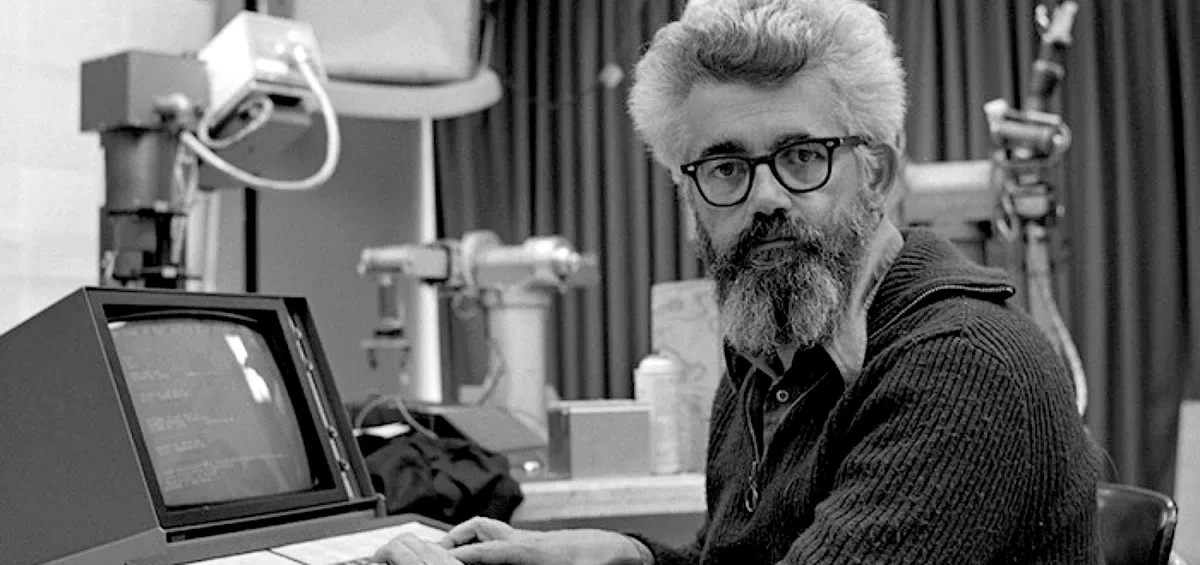 This is why the usual joke about Lisp, which I am not going to make, is about the language looking something similar to
`(((()(((((())(()))))))()()()))`.
Version 2.0 didn't really materialize and the parenthesis are with us to this day. And maybe keeping those wasn't such a
bad idea. It does look quite different from any other language.
> "One can even conjecture that Lisp owes its survival specifically to the fact that its programs are lists, which everyone, including me, has regarded as a disadvantage."
>
> John McCarthy, "History of Lisp", 1979
And through the years Lisp has died, every year. It even had its own
[hardware architecture](https://en.wikipedia.org/wiki/Lisp_machine) for a time. But these are now in Museums (and
without doubt in basements of the department of defense).
But every generation seems to rediscover it and its charms, and there are pockets of resistance that allow it, like a
virus hidden in a ganglions, to survive generational gaps (Emacs!). There are also industrial players that have always
used it (such as NASA and Boeing) which allowed for fresh generations to be exposed to it. But unlike Cobol and Algol or
Fortran, Lisp stays fresh. People that discover it feel often that Lisp is an idea that could have happened now.
So what's so special about it? Lisp treats code as data. We are used to separate those, but really, code is data, right?
In all other languages (that are not a Lisp that is) you write code as text. For a computer the code itself is
meaningless. It's text (you can think about Ruby here, a language that tries hard to be as visually pleasing as
possible, as potentially the most contrary thing to Lisp, even if some have argued that it is, by itself, an acceptable
Lisp.)
So you have this "source code", and then you have either an interpreter or a compiler that will transform your code into
something else, an AST (an Abstract Syntax Tree) that it will either interpret directly .. or create yet another
intermediary representation (as byte-code to be itself interpreted by a virtual machine, or as object code to be run
against the processor).
In Lisp, all program code is written as parenthesized lists ("s-expressions") that contain other parenthesized lists.
Its parentheses all the way down. Why is this important? Because it means a Lisp program can very easily read and write
Lisp code. In Lisp the AST and the code are the same. Lisp is basically the simplest form of writing an AST such as that
it would still be readable by a human.
> "Lisp has jokingly been called "the most intelligent way to misuse a computer." I think that description is a great
> compliment because it transmits the full flavor of liberation: it has assisted a number of our most gifted fellow
> humans in thinking previously impossible thoughts."
>
> * Edsger Dijkstra, The Humble Programmer, 1972
In a way Lisp is the only language in which you actually code. In other languages you write text that is transformed to
code. And Lisp is a dynamic language, making Lisp an incredibly powerful tool to create very concise programs to treat a
specific issue. More often than not when you write Lisp code you are writing a whole language, one that could express
your problem space with elegance (DSLs, or domain specific languages). Weirdly, with all of its parentheses and its
prefixed expressions, that admittedly can put off the occasional onlooker, `(* 7 9)` being seven multiplied by nine,
Lisp code is some of the most readable code you can find.
## Lisp in 2019
As I told you Lisp is not a language but a family of languages, we call them dialects. For example the very popular
[HackerNews](https://news.ycombinator.com/) forum, is itself written in arc, a dialect of Lisp (created by Paul Graham,
seemingly just for the occasion). And some dialects have become quite popular over the last few years, Clojure which is
a dialect targeting the JVM has become immensely popular in data science circles. Scheme (one of the older dialects at
44 years old) has seemed to have regained some youth, Racket has been gaining traction, and now many in the Python world
have started toying with [Hy](https://github.com/hylang/hy), a dialect of Lisp that's embedded in Python.
But for many Lisp, is Common Lisp, an ANSI standard, and it too, like its brethren (or children) is, beyond an object of
curiosity, gaining interest.
## ... so we are happy, relieved and somewhat amused to announce the availability of Common Lisp on Platform.sh
The thing is that we do really like to eat our own dog food, and we have a couple of services written in Common Lisp. So
for our own internal use we have created a run-time (it really is not that much effort). And although, we can't really
say people have been banging at our doors to get proper Lisp support... we truly hope some of you will enjoy this.
## How would you deploy a Lisp web application on Platform.sh?
### Step 1. Write your Lisp program:
Here I created an `example.lisp` with the following:
```lisp {filename="example.lisp"} theme={null}
(defpackage #:example
(:use :hunchentoot :cl-who :cl)
(:export main))
(in-package #:example)
(define-easy-handler (greet :uri "/hello") (name)
(with-html-output-to-string (s) (htm (:body (:h1 "hello, " (str name))))))
(export 'main)
(defun main ()
(let ((acceptor (make-instance
'easy-acceptor
:port (parse-integer (uiop:getenv "PORT")))))
(start acceptor)
(sleep most-positive-fixnum)))
```
> (This code is quite surprisingly legible, "use" means "import all the symbols so that I don't have to prefix them with
> the package name", 'hunchentoot' is a web server in Lisp (you can also notice how we get the `PORT` from the
> environment, cl-who allows us to create the actual HTML )) (and this is the only Lisp joke I am doing, it is subtle
> (right?))
### Step 2. Add an `.asd` file
ASDF is the "make" of Common Lisp, it is a description of dependencies between files of source code in such a way that
they can be compiled and loaded in the right order.
So, create an `.asd` file. If Platform.sh finds one in the repository it will do the right thing, installing a quicklisp
distribution and building what needs to be built.
Here is an `example.asd` file:
```asd {filename="example.asd"} theme={null}
(defsystem example
:name "example"
:description "Example of a simple web application on Platform.sh"
:author "Lisp Coder
This is why the usual joke about Lisp, which I am not going to make, is about the language looking something similar to
`(((()(((((())(()))))))()()()))`.
Version 2.0 didn't really materialize and the parenthesis are with us to this day. And maybe keeping those wasn't such a
bad idea. It does look quite different from any other language.
> "One can even conjecture that Lisp owes its survival specifically to the fact that its programs are lists, which everyone, including me, has regarded as a disadvantage."
>
> John McCarthy, "History of Lisp", 1979
And through the years Lisp has died, every year. It even had its own
[hardware architecture](https://en.wikipedia.org/wiki/Lisp_machine) for a time. But these are now in Museums (and
without doubt in basements of the department of defense).
But every generation seems to rediscover it and its charms, and there are pockets of resistance that allow it, like a
virus hidden in a ganglions, to survive generational gaps (Emacs!). There are also industrial players that have always
used it (such as NASA and Boeing) which allowed for fresh generations to be exposed to it. But unlike Cobol and Algol or
Fortran, Lisp stays fresh. People that discover it feel often that Lisp is an idea that could have happened now.
So what's so special about it? Lisp treats code as data. We are used to separate those, but really, code is data, right?
In all other languages (that are not a Lisp that is) you write code as text. For a computer the code itself is
meaningless. It's text (you can think about Ruby here, a language that tries hard to be as visually pleasing as
possible, as potentially the most contrary thing to Lisp, even if some have argued that it is, by itself, an acceptable
Lisp.)
So you have this "source code", and then you have either an interpreter or a compiler that will transform your code into
something else, an AST (an Abstract Syntax Tree) that it will either interpret directly .. or create yet another
intermediary representation (as byte-code to be itself interpreted by a virtual machine, or as object code to be run
against the processor).
In Lisp, all program code is written as parenthesized lists ("s-expressions") that contain other parenthesized lists.
Its parentheses all the way down. Why is this important? Because it means a Lisp program can very easily read and write
Lisp code. In Lisp the AST and the code are the same. Lisp is basically the simplest form of writing an AST such as that
it would still be readable by a human.
> "Lisp has jokingly been called "the most intelligent way to misuse a computer." I think that description is a great
> compliment because it transmits the full flavor of liberation: it has assisted a number of our most gifted fellow
> humans in thinking previously impossible thoughts."
>
> * Edsger Dijkstra, The Humble Programmer, 1972
In a way Lisp is the only language in which you actually code. In other languages you write text that is transformed to
code. And Lisp is a dynamic language, making Lisp an incredibly powerful tool to create very concise programs to treat a
specific issue. More often than not when you write Lisp code you are writing a whole language, one that could express
your problem space with elegance (DSLs, or domain specific languages). Weirdly, with all of its parentheses and its
prefixed expressions, that admittedly can put off the occasional onlooker, `(* 7 9)` being seven multiplied by nine,
Lisp code is some of the most readable code you can find.
## Lisp in 2019
As I told you Lisp is not a language but a family of languages, we call them dialects. For example the very popular
[HackerNews](https://news.ycombinator.com/) forum, is itself written in arc, a dialect of Lisp (created by Paul Graham,
seemingly just for the occasion). And some dialects have become quite popular over the last few years, Clojure which is
a dialect targeting the JVM has become immensely popular in data science circles. Scheme (one of the older dialects at
44 years old) has seemed to have regained some youth, Racket has been gaining traction, and now many in the Python world
have started toying with [Hy](https://github.com/hylang/hy), a dialect of Lisp that's embedded in Python.
But for many Lisp, is Common Lisp, an ANSI standard, and it too, like its brethren (or children) is, beyond an object of
curiosity, gaining interest.
## ... so we are happy, relieved and somewhat amused to announce the availability of Common Lisp on Platform.sh
The thing is that we do really like to eat our own dog food, and we have a couple of services written in Common Lisp. So
for our own internal use we have created a run-time (it really is not that much effort). And although, we can't really
say people have been banging at our doors to get proper Lisp support... we truly hope some of you will enjoy this.
## How would you deploy a Lisp web application on Platform.sh?
### Step 1. Write your Lisp program:
Here I created an `example.lisp` with the following:
```lisp {filename="example.lisp"} theme={null}
(defpackage #:example
(:use :hunchentoot :cl-who :cl)
(:export main))
(in-package #:example)
(define-easy-handler (greet :uri "/hello") (name)
(with-html-output-to-string (s) (htm (:body (:h1 "hello, " (str name))))))
(export 'main)
(defun main ()
(let ((acceptor (make-instance
'easy-acceptor
:port (parse-integer (uiop:getenv "PORT")))))
(start acceptor)
(sleep most-positive-fixnum)))
```
> (This code is quite surprisingly legible, "use" means "import all the symbols so that I don't have to prefix them with
> the package name", 'hunchentoot' is a web server in Lisp (you can also notice how we get the `PORT` from the
> environment, cl-who allows us to create the actual HTML )) (and this is the only Lisp joke I am doing, it is subtle
> (right?))
### Step 2. Add an `.asd` file
ASDF is the "make" of Common Lisp, it is a description of dependencies between files of source code in such a way that
they can be compiled and loaded in the right order.
So, create an `.asd` file. If Platform.sh finds one in the repository it will do the right thing, installing a quicklisp
distribution and building what needs to be built.
Here is an `example.asd` file:
```asd {filename="example.asd"} theme={null}
(defsystem example
:name "example"
:description "Example of a simple web application on Platform.sh"
:author "Lisp Coder